


About the team behind this guide
Hope Heating & Air is a family-owned HVAC company serving Chamblee and the rest of metro Atlanta, licensed in Georgia under Lic# CR110385 and insured. Our founder started out in a high school heating and air program, then spent years on job sites learning the craft before starting the company. With 20+ years behind us, someone answers the phone 24 hours a day, and we recommend only what your home actually needs.
A high-efficiency AC pays off in Chamblee, GA when four things line up: how inefficient your current system is, what you pay per kilowatt-hour, how many hours the system runs through an Atlanta summer, and whether your ductwork holds the cool air you paid for. Here is how to tell whether your home is one of them.
Key Points
- Payback depends on your current system’s efficiency, your power rate, your runtime, and your ductwork, not on a single industry figure.
- Georgia’s federal minimum for a new split-system air conditioner is 14.3 SEER2 under 45,000 BTU and 13.8 SEER2 at 45,000 BTU and above.
- The federal 25C tax credit applied to systems placed in service before December 31, 2025, so it is not available on an install today.
- A high-efficiency system also runs quieter and pulls more humidity out of your air.
- Annual maintenance is what protects the efficiency you paid for.
The Advantages of High-Efficiency AC in Chamblee, GA
A high-efficiency AC does three things a builder-grade unit does not. It uses less electricity for the same cooling, it runs quieter, and it pulls more humidity out of the air, which matters through an Atlanta August.
Better dehumidification also helps households sensitive to indoor air quality. Many high-efficiency systems carry longer manufacturer warranties, so the investment is protected for longer.
Sizing and installation decide whether you actually see those gains. A correctly matched high-efficiency AC installation is what turns an efficiency rating on a label into a lower bill.
How to Determine if Your Home Is Ready for a High-Efficiency Upgrade
Start with your current system’s age. If it is over 10 years old, running longer cycles, and costing more each summer, replacement is on the table.
Next, look at insulation, ductwork, and sealing. Older homes near Clairmont Road, Buford Highway, and along I-85 often need work in these areas first, because a high-efficiency AC cannot make up for air escaping through leaky ducts.
Then look at your bills and your comfort. Hot spots, climbing costs, or a house that never quite dries out all point toward a system that no longer fits the home. Regular annual AC maintenance service keeps a new system performing the way it did on day one.
What Actually Decides Your Payback Period
Any contractor who quotes you a flat payback figure is guessing, because the number moves with four things specific to your house: the efficiency of the system you have now, your power rate per kilowatt-hour, how many hours the system runs in an Atlanta summer, and how well your ductwork and insulation hold the cool air you paid for.
A 2005 system in a leaky 1960s ranch near Clairmont Road pays back a high-efficiency AC upgrade far faster than a 2016 system in a tight, well-insulated house two streets over. Same equipment, different answer.
Here is the one number worth knowing before you shop. Georgia sits in the Department of Energy’s Southeast region, so since January 2023 every new split-system air conditioner under 45,000 BTU sold here has to hit at least 14.3 SEER2, and 13.8 SEER2 at 45,000 BTU and above. That is the floor, not the goal. The gap between that legal minimum and a genuine high-efficiency system is where your savings live.
One thing that changed for 2026: the federal 25C Energy Efficient Home Improvement Credit, which covered up to $600 on a qualifying central air conditioner, applied to property placed in service before December 31, 2025. It is not available for a system installed today. Plenty of HVAC pages still list it as current. If a contractor builds that credit into your payback math this year, get a second quote.
Choosing the Right High-Efficiency AC System for Your Chamblee Home
Three things decide the right system: capacity matched to your home, the efficiency rating, and the features that suit how you actually live.
Look past the SEER2 number alone. Variable-speed compressors hold a steadier temperature and dehumidify better than single-stage equipment, and a smart thermostat installation gives you real control over when the system runs.
Have a technician measure your cooling load rather than matching the tonnage of the unit you already have. Oversized systems short-cycle, which costs you both comfort and efficiency. For some Chamblee properties, a heat pump handles both seasons on one system and is worth pricing alongside a straight AC replacement.
Expert Tips for Maintaining High-Efficiency AC Systems in Chamblee, GA
Change or clean filters every one to three months. A clogged filter starves airflow, and starved airflow erases the efficiency you paid a premium for.
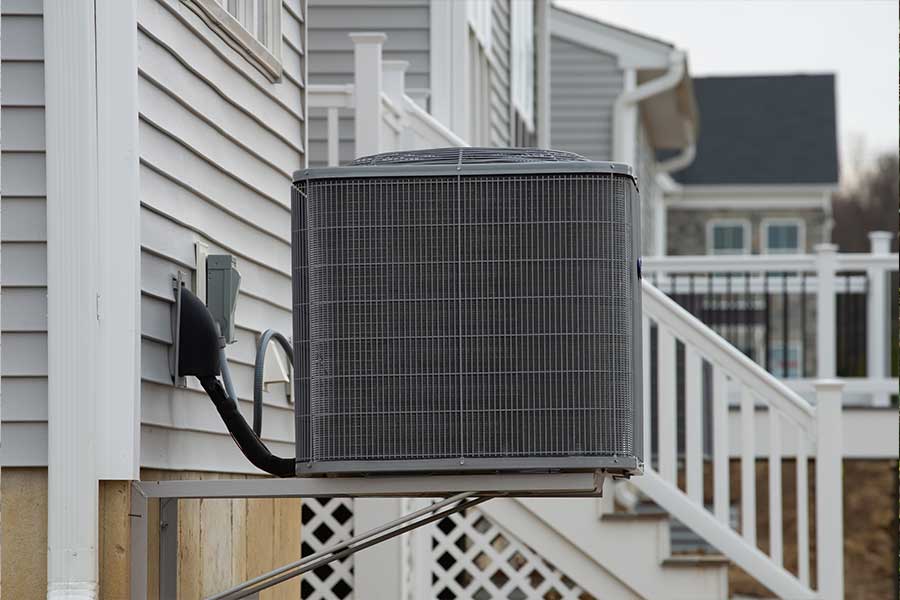
Book an annual tune-up before cooling season. A technician inspects the system, cleans the coils, and catches small faults before a July breakdown. Keep the outdoor unit clear of debris and trimmed back on all sides.
If performance slips mid-season, do not wait it out. Prompt AC repair in Chamblee protects both the equipment and the savings, and we answer the phone 24 hours a day when it happens on a Sunday.
Making High-Efficiency AC Worth It in Chamblee, GA
A high-efficiency AC is worth it when your current system is old, your ducts are sound, and you plan to stay in the house long enough to collect the savings. It is a harder case when your equipment is newer or your envelope leaks.
The honest way to find out is to have someone measure your home rather than quote you a rule of thumb. Book a consultation and we will run the load calculation, price two or three options against your actual power usage, and tell you plainly if staying put is the better call this year.