



Key Points
- The right AC unit size depends on your home’s square footage, ceiling height, and window exposure.
- For Atlanta’s long cooling season, look for a SEER rating of 16 or higher.
- Central AC cools the whole home; ductless mini-splits are ideal for rooms or additions without ductwork.
- Professional installation protects your manufacturer’s warranty and ensures proper sizing.
- Budget for both the upfront cost and long-term efficiency to find the best value for your home.
Atlanta summers are relentless. With temperatures regularly climbing past 90 degrees and humidity that makes it feel even hotter, choosing the right AC unit is one of the most important decisions you’ll make as a homeowner. Get it right, and you stay comfortable all season without overpaying on energy. Get it wrong, and you’re looking at years of uneven cooling and unexpected repairs. At Hope Heating & Air, we’ve helped Atlanta families navigate this decision for more than 30 years. This guide covers everything you need to know. To get started, explore our AC installation in Atlanta for expert guidance from a team your neighbors already trust.
What Types of AC Units Are Available?
When selecting an AC unit for your home, you’ll find several types worth exploring. Central cooling systems are ideal for whole-home comfort. They use ductwork to deliver consistent temperatures and reduced humidity to every room. Portable units offer flexibility for renters or temporary cooling needs, while window units are an affordable option for individual rooms.
For a more modern and efficient solution, ductless mini-split installation delivers targeted cooling to specific zones without requiring ductwork. It’s a popular choice for Atlanta homes with additions, sunrooms, or rooms that aren’t connected to existing ducts. For whole-home comfort without a separate furnace, heat pump installation in Atlanta is another strong option. Because Atlanta winters are mild, a heat pump can handle both cooling and heating efficiently year-round.
Most modern AC systems are also compatible with smart thermostats, which let you control your cooling schedule remotely from your phone. Pairing your new system with a smart thermostat installation is one of the easiest ways to improve efficiency and cut monthly energy costs.
How to Size an AC Unit for Your Atlanta Home
Start with a BTU calculation to determine the right cooling capacity for your space. BTU (British Thermal Units) measures how much heat an AC can remove per hour. Measure the square footage of the area you want to cool by multiplying the room’s length by its width.
Next, account for ceiling height, window count, and sun exposure. Larger rooms with high ceilings or lots of south-facing windows require more cooling capacity. In Atlanta specifically, high humidity adds to the cooling load your system needs to handle. Our technicians often recommend sizing up slightly to account for the moisture in the air during peak summer months.
Ductwork size matters too. The most powerful AC unit won’t perform efficiently if the ducts can’t handle the required airflow. Always have a licensed technician verify ductwork compatibility before purchasing a new system.
Understanding SEER Ratings and Energy Efficiency
The Seasonal Energy Efficiency Ratio (SEER) is the standard measure for how efficiently an air conditioner operates over a full cooling season. The higher the SEER rating, the less energy your system uses. As of 2023, new AC systems in the Southeast must meet a minimum SEER2 rating of 15. For Atlanta’s long summers, we recommend 16 or higher. ENERGY STAR certifies units that meet or exceed federal efficiency standards, which is a reliable benchmark when comparing models.
Higher-efficiency units carry a higher upfront price, but the energy savings often pay for the difference within a few cooling seasons. A 16 or 18 SEER system running through Atlanta’s long summer will use meaningfully less energy than a baseline 15 SEER unit — and that difference shows up on your monthly bill every month the system runs.
For additional guidance on evaluating cooling system efficiency and estimating long-term energy costs, the U.S. Department of Energy offers helpful comparison tools for homeowners evaluating system options.
What to Know Before AC Installation
Proper installation is as important as the unit itself. Before installation begins, verify that your electrical panel can handle the additional load and that the wiring is up to code. An undersized electrical setup can cause breaker issues and shorten your system’s lifespan.
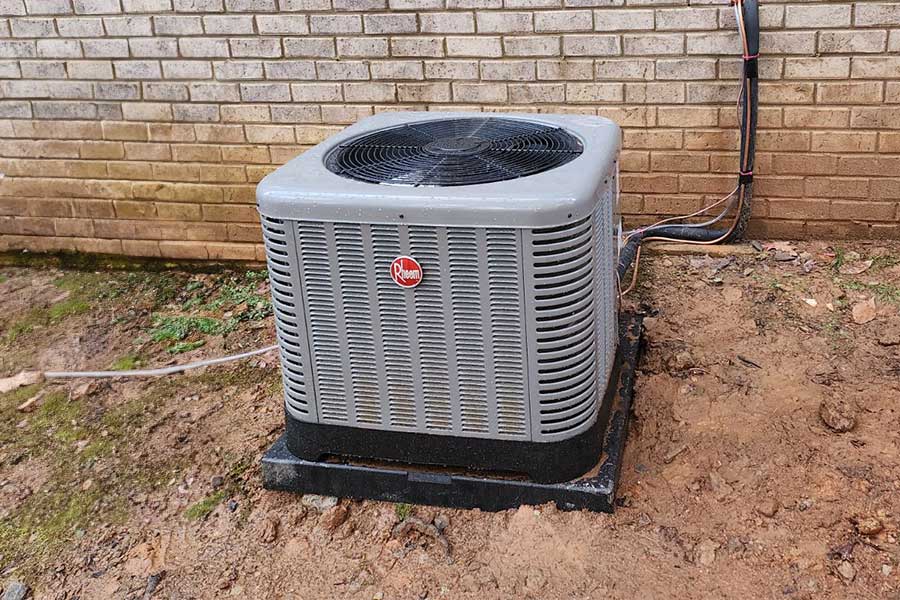
Outdoor unit placement matters for both efficiency and access. The unit needs adequate clearance on all sides for airflow and future maintenance. Keep the area clear of vegetation, debris, and stored items.
If you’re replacing an existing system, your ductwork should be inspected for leaks, damage, or undersized sections. Improperly sealed ducts can waste 20 to 30 percent of your conditioned air before it ever reaches a room. Hope Heating & Air’s licensed technicians check all of these factors before any installation begins, so there are no surprises after the job is done.
Keeping Your New AC Running Efficiently
A new AC system is a significant investment, and how well it’s maintained determines how long it performs. Replace filters every one to three months, depending on usage and air quality. In Atlanta’s dusty spring and pollen season, monthly checks are worth the habit.
Have the evaporator and condenser coils cleaned annually. Dirty coils reduce heat transfer efficiency and cause the system to run longer to reach your target temperature. Also schedule annual refrigerant checks — low refrigerant strains the compressor and drives up energy consumption.
Clean ducts and vents complete the picture. Obstructions anywhere in the system reduce efficiency and force your equipment to work harder. We recommend annual professional maintenance to keep everything in order. When you’re ready to set up a service plan, our AC maintenance in Atlanta team is easy to reach and always straightforward about what your system actually needs.
How to Budget for a New AC Unit in Atlanta
The upfront cost of a new AC system is only part of the financial picture. A cheaper unit with a lower efficiency rating will cost more to run every month, and those costs add up quickly over a 15 to 20 year system lifespan.
Here’s what to factor in:
- Initial Cost: In the Atlanta area, a standard central AC installation typically ranges from $3,500 to $8,000 depending on system size and efficiency. Ductless and heat pump systems vary based on the number of zones.
- Financing Options: Hope Heating & Air can help connect you with financing plans that spread the cost over time and make higher-efficiency systems more accessible.
- Seasonal Deals: Late fall and winter are typically the best times to purchase a new system, when demand is lower and pricing is more competitive.
An energy-efficient model costs more upfront but delivers better long-term value. Consider the full cost over the life of the equipment, not just the sticker price.
Choosing the Right Brand and Warranty
The brand matters more than most homeowners realize. At Hope Heating & Air, we install and service systems from Rheem, AprilAire, and Honeywell — brands we’ve worked with for years and stand behind. When evaluating brands, look for customer reviews from homeowners in comparable climates. Performance in Atlanta’s humid summers differs from performance in a dry or mild climate.
A longer warranty generally reflects a manufacturer’s confidence in their product. Check what the warranty covers — parts only, or parts and labor. Labor coverage is especially valuable in the first few years of ownership when any installation issues are most likely to surface.
Service availability matters as much as the warranty itself. Choose a brand with authorized service providers in the Atlanta area. Working with a local installer who services what they sell means one phone call handles everything.
Ready to Find the Right AC Unit for Your Home?
Choosing the right AC unit comes down to knowing your home, your climate, and what you need from a system over the long run. Atlanta’s summers are tough on equipment that isn’t properly sized or installed, and the right decision upfront saves years of headaches. If you’d like a straight answer from a team that’s been doing this for over 30 years, we’re happy to help. Get in touch with our team today and let us walk you through your options.
Frequently Asked Questions
What size AC unit do I need for a 1,500 sq ft home?
A 1,500 sq ft home in Atlanta typically requires a 2.5 to 3 ton (30,000 to 36,000 BTU) system. Ceiling height, insulation, window count, and sun exposure all affect the final recommendation. A licensed technician should perform a Manual J load calculation before any installation.
What is a good SEER rating for Atlanta, GA?
For Atlanta’s long, hot summers, we recommend a SEER rating of 16 or higher. The minimum for new installations in the Southeast is SEER2 15 as of 2023. Higher-efficiency units cost more upfront but often pay for themselves within a few cooling seasons.
How long does a new AC unit last?
A well-maintained central air conditioning system typically lasts 15 to 20 years. In Atlanta’s hot, humid climate, annual maintenance is especially important for reaching the upper end of that range.
What's the difference between central AC and a ductless mini-split?
Central AC uses ductwork to distribute cooled air throughout the entire home from a single system. A ductless mini-split delivers cooling directly to specific zones through wall-mounted units without ductwork. Mini-splits are ideal for additions, converted spaces, or rooms that are difficult to cool with a central system.
How much does a new AC unit cost in Atlanta, GA?
In the Atlanta area, a new central AC installation typically ranges from $3,500 to $8,000 depending on system size and efficiency. Ductless and heat pump systems vary by number of zones. The best way to get an accurate estimate is to have a technician assess your home in person.